Your child’s first dental visit should happen much earlier than many parents expect: by the time the first tooth appears, and no later than the first birthday. Here is why, what happens at that first appointment, and how to care for baby teeth at home.
The guideline: first tooth or first birthday
The American Academy of Pediatric Dentistry (AAPD) recommends that a child see a dentist when the first tooth appears, or no later than the first birthday. The American Dental Association (ADA) gives the same advice, recommending a first visit within six months after the first tooth comes in, but no later than age one.
The reason is simple: cavities can start as soon as teeth appear. An early visit lets the dentist spot problems while they’re small and gives you practical advice before habits are set.
Why baby teeth matter
It’s easy to think baby teeth don’t matter because they fall out. According to the AAPD and ADA, healthy baby teeth help children chew and speak clearly, and they hold space for the permanent teeth and help guide them into place. When a baby tooth is lost too early, nearby teeth can shift and leave permanent teeth crowded or crooked. The AAPD also notes that mouth problems can interfere with eating, speaking, self-esteem and daily activities.
What happens at a baby’s first dental visit
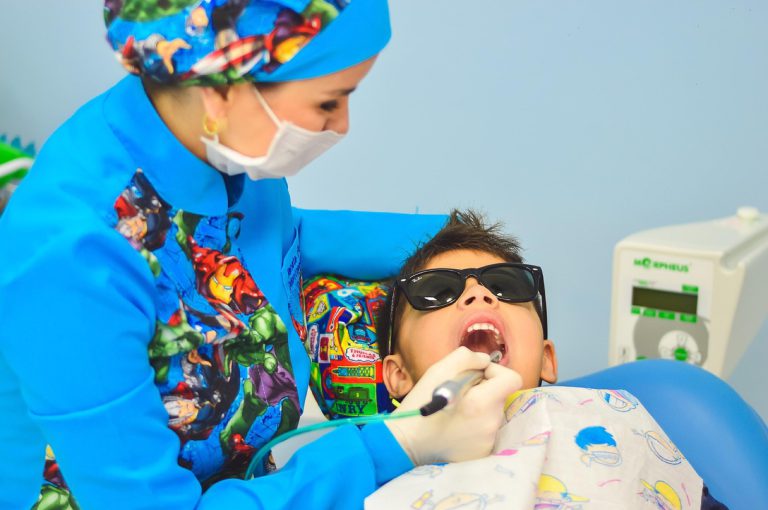
A first visit is usually short and gentle. According to the ADA’s MouthHealthy site, the dentist will typically:
- Check the teeth, jaw, bite and gums to make sure everything is developing normally, and look for cavities, injuries or other problems.
- Do a gentle cleaning if appropriate for your child’s age and number of teeth.
- Talk with you about home care, such as brushing, toothpaste, feeding habits, teething, pacifiers and thumb sucking.
You will likely sit in the dental chair with your baby on your lap. Some crying or wiggling is completely normal. The dentist may also talk about fluoride, including fluoride varnish, and tell you when to come back. The AAPD recommends a checkup every six months for most children; your dentist will suggest a schedule based on your child’s needs.
How to prepare
- Book a time when your baby is usually rested and alert, not during naptime.
- Give a light meal beforehand, and brush your baby’s teeth before you go.
- Ask the office for health history forms ahead of time so you can fill them out at home.
- Write down your questions, such as teething, bottle use or pacifiers.
- Bring your child’s insurance, Medicaid or Florida KidCare card.
Caring for baby teeth at home
Before teeth come in
The ADA suggests starting in the first few days after birth by gently wiping your baby’s gums with a clean, moist gauze pad or washcloth.
Once teeth appear
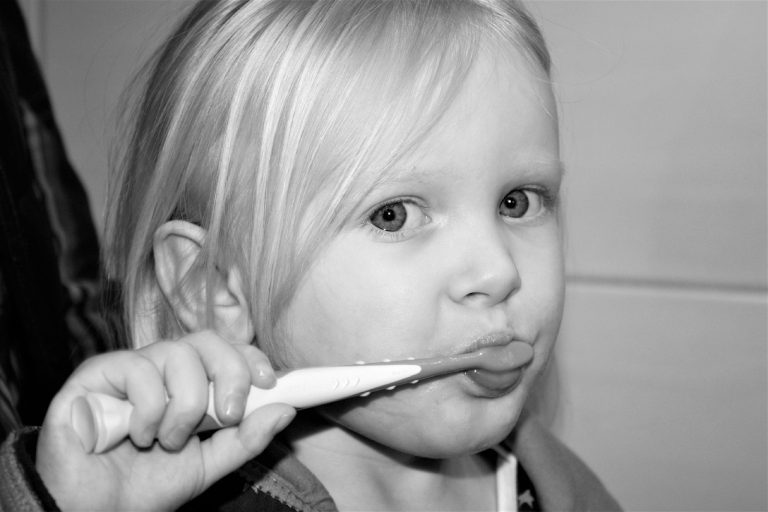
- Brush twice a day, morning and night, with a small, soft toothbrush.
- Toothpaste amount: the ADA and AAPD advise a smear of fluoride toothpaste, about the size of a grain of rice, for children under 3, and a pea-sized amount for ages 3 to 6. The CDC suggests checking with your child’s doctor or dentist before using fluoride toothpaste for children younger than 2. Teach your child to spit out toothpaste rather than swallow it.
- Clean between teeth once your child has two teeth that touch.
- Supervise brushing until your child can do it well alone.
Feeding and bedtime habits
- The AAPD advises against nursing children to sleep or putting anything other than water in a bedtime bottle.
- Don’t dip pacifiers in sugar, honey, juice or sweetened drinks, which the ADA notes can lead to tooth decay.
- Offer water between meals, and limit sugary drinks and snacks.
Ask about fluoride varnish
The CDC suggests talking to your dentist or doctor about putting fluoride varnish on your child’s teeth as soon as the first tooth appears. Varnish is painted on quickly by a dentist or other health care professional, so you can ask about it at well-child checkups as well as dental visits. Because Florida public water systems stopped adding fluoride in 2025, it’s worth asking your child’s dentist how to make sure your child gets enough fluoride.
Finding a pediatric dentist
Many general dentists see young children, and pediatric dentists specialize in it. A pediatric dentist has two to three years of specialty training after dental school focused on caring for children. Either can be a good choice for a first visit.
When you call an office, ask:
- Do you see babies and toddlers for a first visit?
- Do you accept our insurance, Medicaid dental plan or Florida KidCare plan?
- Can a parent stay with the child during the visit?
- Does anyone on staff speak Spanish or Haitian Creole, if you need it?
You can confirm a dentist’s Florida license on the Florida Board of Dentistry website.
If cost is a concern
Children on Florida Medicaid have broad dental coverage through a Medicaid dental plan, and Florida KidCare includes dental coverage for eligible children who don’t qualify for Medicaid. Apply for KidCare at floridakidcare.org or 1-888-540-5437. County health departments and community health centers in South Florida also offer children’s dental services, some on a sliding fee scale.
When to get help right away
Call your child’s dentist promptly for a knocked-out or broken tooth, a toothache, or swelling of the gums or face. If your child has facial swelling that affects breathing or swallowing, heavy bleeding, or a jaw injury, call 911 or go to an emergency room.
Find a pediatric dentist near you
Browse pediatric dentists across Miami-Dade, Broward and Palm Beach, or search by city on our Find a Dentist page, for example pediatric dentists in Miami.
Ready to pick one? See our guide on how to choose a pediatric dentist.